A standard unit on a construction job typically gets serviced once a week, per the ANSI/PSAI Z4.3 baseline for up to 10 users over a 40 hour week. Event rentals and high-traffic sites in Dearborn Heights often need two or three visits weekly. Dearborn Heights Porta Pros builds the schedule around your headcount, not a flat calendar.
The honest answer: it depends on how many people are using the unit and for how long. ANSI/PSAI Z4.3 sets the baseline at once per week for up to 10 users across a 40 hour week, and that number is the floor, not the ceiling. A crew of 25 on a construction site burns through capacity faster than that same unit sitting at a quiet backyard home renovation project. Weekend events push service to before-and-after cleanings rather than a weekly cycle, since the whole rental might last 48 hours. If you are booking a standard porta potty rental for a multi-week job in Dearborn Heights, ask about a fixed weekly cleaning day so your crew always knows when the truck is coming. For larger crews, check the how many porta potties do I need guide before you lock in a service interval, because unit count and cleaning frequency move together.
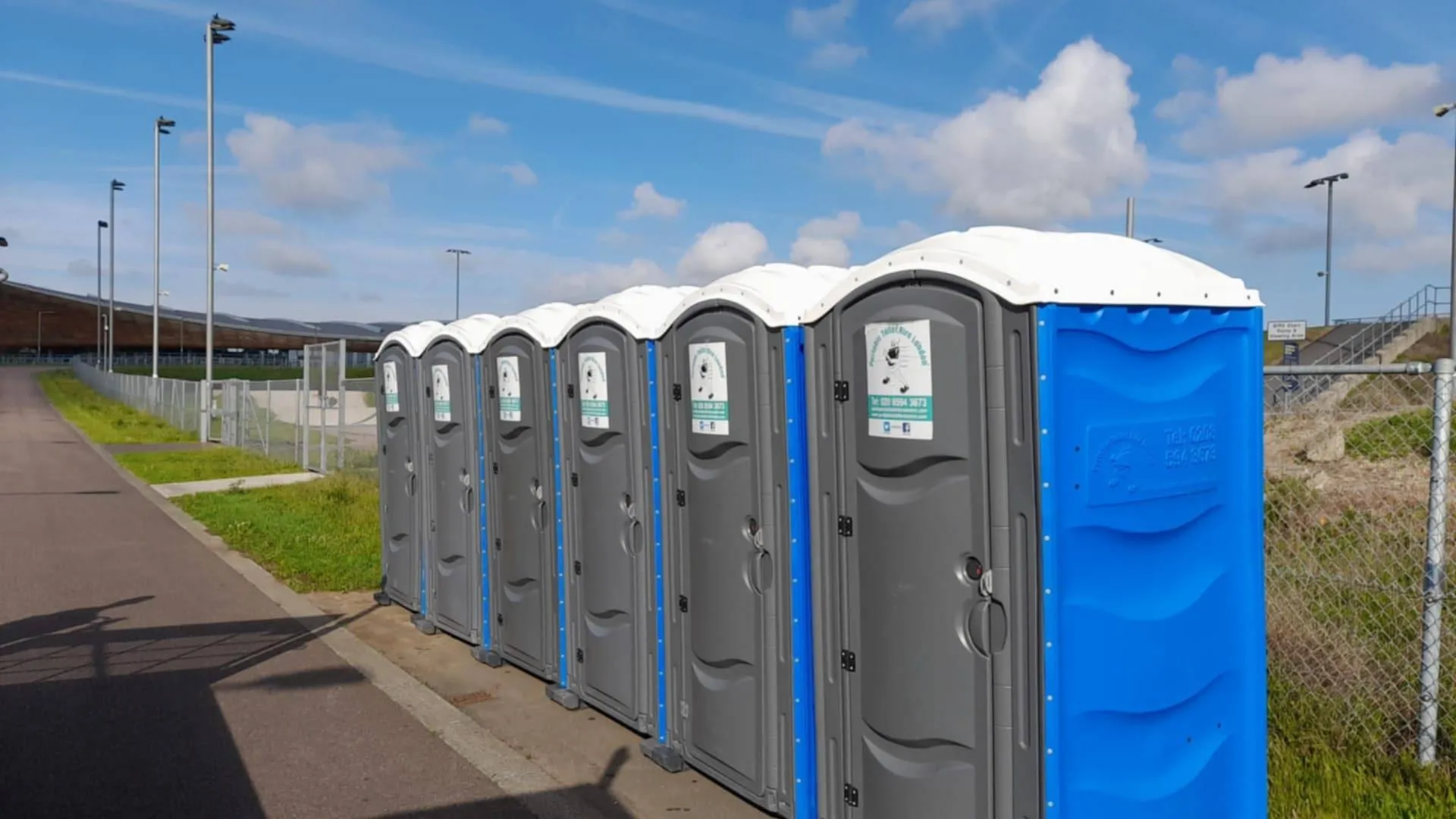
A real service visit pumps the tank, flushes and refills fresh water, restocks paper, and wipes down the interior. It is not a rinse and run. OSHA 1926.51(a)(1) requires an adequate supply of potable water at the jobsite, and that obligation extends to the water used inside the unit itself, not just a separate jug on a table. A standard unit carries a 60 to 70 gallon holding tank, and once that fills close to capacity the smell and mess show up fast if the schedule slips. That is the tradeoff with self-cleaning porta potty rental options on the market: they can extend the interval between full-service pump-outs, but they still need a technician checking tank levels on a normal rotation. If your crew is applying paints, coatings or solvents on site, OSHA 1926.51(f)(1) requires washing facilities for that specific contaminant exposure, which is a separate requirement from the toilet itself. A portable sink rental or handwashing station rental usually rides alongside the toilet order to cover that.
OSHA 1926.51(c)(1) sets toilet counts for construction sites: one facility for 20 workers or fewer, then one toilet seat and one urinal per 40 workers as the crew grows past 20, and per 50 workers once you hit 200 or more. That ratio only works if the units stay serviced. A single overloaded unit does not become two units by regulation, but it does become a liability the moment it is out of service. If you run a non-construction workplace, 1910.141(c)(1)(i) sets a separate general industry ratio, so check which standard applies before you plan headcount. Farms with hand-labor crews fall under 1928.110 instead, which calls for one facility per 20 employees within a quarter mile walk, a distance rule that has nothing to do with construction sites. Whatever standard applies, 29 CFR 1910.141(d)(2) requires soap and towels or a hand-drying device at any washing station. Hand sanitizer alone does not satisfy that. If you are unsure which rule covers your Dearborn Heights jobsite, the OSHA portable toilet requirements page breaks down each ratio side by side.
A unit on a normal weekly cycle should not smell noticeably by the time the truck arrives, assuming the headcount matches the schedule. Odor is almost always a sign the tank filled faster than the service interval accounted for, which is a sizing problem more than a cleaning problem. If you are getting complaints mid-week, the fix is usually adding a unit or moving to twice-weekly service, not switching companies. The do porta potties smell page covers what is normal and what is not in more depth. Placement also plays a role: a unit baking in direct sun all day works harder than one in shade, something worth checking against the porta potty placement guide before delivery day. Winter changes the math too, since cold slows down the breakdown process inside the tank, covered separately on the porta potty in winter page. For a deluxe flushable porta potty or an ADA accessible porta potty unit, the same weekly baseline applies, though higher-traffic ADA units clustered per ADA Standards 213.2 often get bumped to a tighter interval.
Renting for a wedding or a weekend festival? Event restroom rental bookings usually get serviced immediately before the event and again right after, rather than mid-weekend. If you are comparing this to what you have seen from outfits like allclean porta potty rental of new york, the core standard is the same nationally: ANSI/PSAI Z4.3 sets the floor, and local crews build up from there based on actual usage. Garden City sits 3.4 miles west of Dearborn Heights and Redford is 4.4 miles north, both inside the same standard service radius we run daily routes through.
Cleaning is bundled into the rental rate, not billed separately for a standard visit. A standard porta potty rental runs in the range shown on the porta potty rental cost page, and that rate includes the scheduled service visits for the rental term.
Yes. Add-on service visits are common for high-traffic construction sites or multi-day events. Call ahead so the route can fit the extra stop; same-week requests are easier than same-day ones.
Self-cleaning units exist and can stretch the interval between full-service visits, but they still need a technician checking tank levels on a normal rotation. Ask when requesting a quote which units are available.
Even light use benefits from a check-in visit, mainly to confirm supplies and water levels. If a unit sat empty on a paused job, tell dispatch so the route can adjust.
Request a quote with your site details and crew size, and the schedule gets built around actual usage. See service areas for coverage near Dearborn Heights.
Call now or request a free quote — clean units, on-time delivery, transparent pricing.